
Welcome to the Brand IDENTITY series.
In the previous edition I briefly touched on The Art of Third Spaces — Building community and advocacy, and I thought, why not expand on this concept as it warrants further exploration, as it has the potential to become a key component of a larger, cost-effective strategy that brands can utilise.
What are third spaces, or “third places” as coined by Ray Oldenburg, the American sociologist back in the day?
To think of third spaces, let’s go back to childhood with Jordan Beal elaborating on what third spaces were, and why they mattered. “For children, third places are places they regularly frequent outside of their home and school environments that are child-centered, such as after-school programs, extracurricular activities, sports, public libraries, clubs, and my personal favorite.”
Sounds familiar?
Think about how much space we don’t cultivate as adults anymore. Deal adds that not only third spaces add a sense of community and belonging but they help with building a sense of self and consciousness of the world, i.e. understanding your role, your difference and your potential to this world as a person.
Entering university as a first-year student introduces you immediately to a variety of groups: day houses, student societies, and varsity sports. These intentional “third spaces” have always been fundamental to campus culture, serving as vital hubs for fostering social circles and facilitating networking.
As you transition into the corporate world, you’ll encounter a noticeable trend: the increasing popularity of coffee shops and bars that cleverly double as relaxed daytime hangouts (chill-spots) and evening lounge environments.
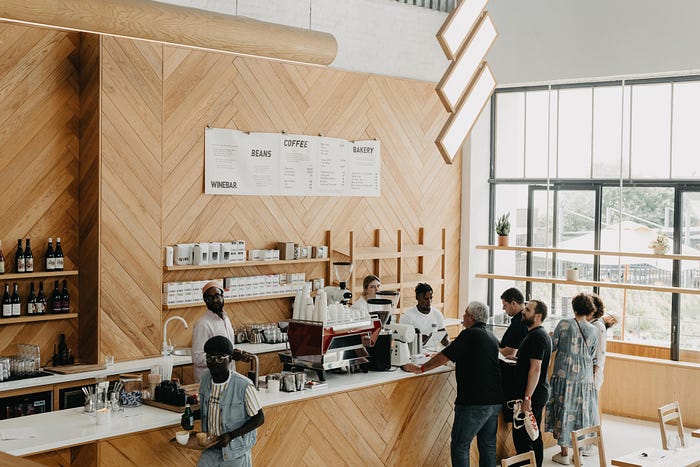
We don’t remain kids, at all, but third spaces follow us through our adulting life. The core truth is that whatever your individual interest, whatever niche pursuit or broad hobby captivates your attention, there is without question, a third space designed for you to explore it, share it, and grow within it.
This persistent pursuit of belonging and shared interest is a defining characteristic of the adult experience.

The NIKE Run Club, or RUN JOZI, stands out as an excellent example of a third space in Johannesburg. It perfectly aligns with the brand’s identity and effectively demonstrates the potential of a well-executed third space. The community offers a setting for individuals to improve themselves, collaboratively, benefiting the brand through product promotion and social influence — a successful outcome for everyone involved.
And, that intersection — This is where a brand meets an opportunity, and brands should be paying more attention to their consumers.
Consistency over everything
In closing, frequency is everything with third spaces, they’re not a once-off pop up space where everyone moves on after. It’s a continuous space for growth if well cultivated. Going into third spaces as a brand requires a long term strategy requiring careful thought, where customers should ideally feel and see your invested time as a brand, just as they invest themselves.